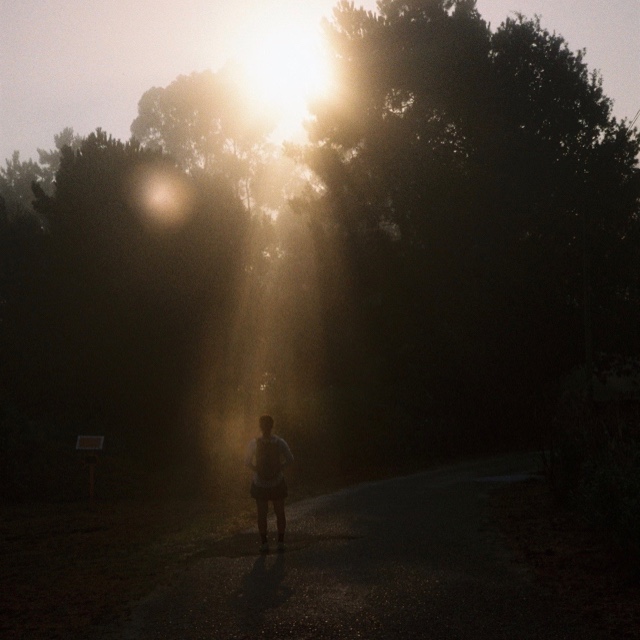

I’m invincible.
I stood in the parking lot of the BLM visitor center in Kanab, Utah, Coyote Buttes South and North permits in hand, facing the lovely older couple I had met just minutes before as I excitedly returned to my car. It hadn’t been a surprise that we had started talking; this always happened. I made friends no matter where I was, even in the middle of the dessert on a not-so-traveled trail. The same, many strangers had poured their hearts out to me in the aisles of the food store and I had recognized the tendency I had of attracting conversations when I was alone many years earlier.
I was carrying a vibration that was open and inviting, in other words, I seemed curious and was approachable.
The couple, adventurous themselves, were impressed to see that I was taking on such an exploration alone. I had traveled alone before and had developed a keen sense for when I was getting in over my head or not, be it with the situation at hand or with the stranger I was about to meet.
“Aren’t you worried to be out there alone?”
I’d been asked this many times in a variety of forms. The answer was a tiny bit of yes and mostly no, but it had become a ritual to repeat the same joke-but-not-joke cheerily in response.
“Well, I’m invincible, so I know I’ll be ok.”
What started as a joke eventually became the foundation of my beliefs around travel and being alone. With repetition of this phrase and repeated proof that I was in fact capable in difficult situations, I was programmed to trust: myself, the forces of protection beyond my perception and my intuition. I always knew I would be ok, even if I didn’t feel it in the moment, and I learned to listen to myself instead of to fear.
This silly phrase aside, the message of how powerful trust is, is the same.
People who can travel alone confidently do three things. They:
Trust themselves
Know themselves
Respect themselves
For some, these are innate, for many, they require practice and self-awareness to develop, however, for all, these three things are possible.
TRUSTING YOURSELF
Trusting yourself, simply, is trusting that you have the skills and sense within you to meet challenges that arise and move through them successfully. Even more simply, you can keep yourself safe. I exercised this ability while wandering around Southern France, rural India and more, and shelter, food and company was always provided, even in unlikely situations.
This ability is rooted in subconscious neurological processes, but it can also be trained consciously. Think about it: if you know or adopt the idea that you’ll be safe no matter what, then you’re able to be present in the moment and allow your instincts, intuition and reflexes to take care of you if you need. In contrast, if you don’t know if you’ll be safe or not, you’ll end up worrying ahead about potential threats and consciously or unconsciously avoiding activities that “seem” risky, or not going on the trip at all. It is all under your control.
Trusting yourself is all about your energy. Someone who trusts themselves is easy to spot and definitely not someone who is attracting the riff-raff of the world. Try saying, “I will be ok no matter what” out loud and then say “I am in danger and I need help” and compare how the two make you feel. The energy of the first one feels solid and calming. The second, helpless, sinking and unmotivating. On top of that notice how it changes your posture. The physical, mental and emotional expression of the energy you’re putting out into the world will change how people treat you.
This isn’t just about staying safe. Trusting yourself can help you find the exact right people and experiences for you. It can be fun. You can adopt the idea that you attract perfect people wherever you are next time you go out. Try imagining how it would feel to be open and inviting or confident and outgoing and then feel it. Make that the truth about you. Hold it as long as you can in your body. As you walk around, trust that feeling will do what it is intended to and watch the magic start! It’s easy to make friends when you’re open.
The most important part to remember is that you create everything with your thoughts and energy. The more clear you are (trusting), the broader your perspective will be and the more choices you’ll have as you explore. When you feel nervous, tell yourself you’re invincible and then move forward.
KNOWING YOURSELF
I know, lots of people travel to “find” themselves. That’s not what knowing yourself means in this context. Knowing yourself simply means knowing the difference between you and your fears. You are neutral, rational and can see situations clearly. Your fear is irrational (often), can manifest as many different emotions and does not allow you to perceive what is really going on. In this case, you can also think of this ‘you’ as your intuition.
I was faced with a situation that felt quite stressful while backpacking. I wanted to take a train to see a friend, but it was many hours in the opposite direction from where I was needing to go. Without giving all of the details of why this was stressful:
I was receiving physical signs that going was a good idea: my pendulum swung yes, there was only one train to Germany (where she lived) out of the trains otherwise only to Italian destinations, etc. I felt a sick feeling that I shouldn’t go and I thought it was my intuition. I got on the train anyway. 5 trains later, every ticket collector had walked past me as if I was invisible, taking the tickets from those adjacent to me, but not me. I had paid $0 to get from Italy to Germany. Going there was the right choice, but my stress and fear of making the wrong choice was so loud that I couldn’t hear my intuition telling me that it was ok to go.
Intuition is a powerful tool when traveling alone. It can provide you important information to guide your decisions, help you find the right people, and tease out the wrong ones. However, it’s important to note, your intuition is not always in your gut and is not usually paired with a visceral response. Intuition is a subtle knowing, or it comes in the form you can interpret at the time. Sometimes I see signs in my outside world, but mostly now the knowing pops quietly into my head.
Try experimenting for yourself! Being able to feel the difference between fear and true intuition is key for overcoming the fear of traveling alone.
RESPECTING YOURSELF
I met a young Turkish man when I was in Thailand. As he tried to give me warning to be safe as a solo female traveler, I reassured him that I have an understanding of how to be safe alone and made my joke about being invincible. He said that that belief was dangerous and cited an example of a girl he knew who traveled alone and always got herself into precarious and sometimes dangerous situations with men. I explained the difference between myself and her. Likely, she was acting invincible, but neglecting to respect herself.
Respecting yourself means understanding your human and personal limitations and boundaries of your abilities, as well as the level of control you have over your vibration (the energy you’re carrying and how to use it to manifest what you need), and acting within those boundaries even though you know you’ll always be ok. If you do this, you’ll build more trust in yourself instead of traumatize yourself. Trusting yourself is a tool. Believing you’re invincible is a tool. You have to know the ability the tool has and also your ability to use the tool to it’s fullest potential in your current state.
Another aspect of respecting yourself is understanding your personal threshold of fear. When you try new things, you want to challenge yourself. The most sustainable way to do so is to do so without putting yourself in a traumatic situation. So, your threshold for fear would be where you mostly feel safe and there is an amount of fear that you can reasonably overcome. Try a 70/30 rule. 70% safety, 30% risk. The key is to not push yourself to the point where if something goes wrong, it may deter you from ever trying again, but if it goes right, you can feel proud and motivated.
If you can respect your physical abilities and your threshold for fear, you’ll be able to try new things and grow beyond to new things at an accelerated rate.
WHAT NOW?
The beautiful thing about this is that you can start practicing these in your life right now. You don’t have to solo travel immediately. Choose something you’re afraid of, maybe starting conversations with strangers, pick a 70/30 version of it like saying something witty to the person in front of you in line at the food store, and then see how it goes.
When I started traveling alone, I was afraid to do it, but at some point, I got tired of the fear controlling me. The value of going, seeing and doing became higher than the value of the fear. I wanted to see the world more than I wanted to feel safe. I became willing to put myself in uncomfortable situations to do the things that I wanted. As with many big shifts, this one came out of a situation where I didn’t feel like I had any other options (I had no one to travel with), but you don’t have to wait until you don’t have any other options.
The key here is to increase the value of what you want, or the reward, and decrease the value of feeling comfortable, or the fear. Essentially, you’re going to gently push yourself into slightly more and more challenging or uncomfortable situations until you aren’t afraid anymore. By exposing yourself to your fears in a graded way, you can overcome them. Eventually, you’ll see that what you were afraid of is purely fun and you’ll feel motivated to move towards the things you’re afraid of instead of away. You’ve felt what happens when you succeed.
You start small; weekend trips, eating out alone, hiking alone, going to the museum alone, etc. then build. When you do this keep it in mind:
you’re invincible.
Everyone can do this. The only thing in your way is you!


